Fails the Bechdel test
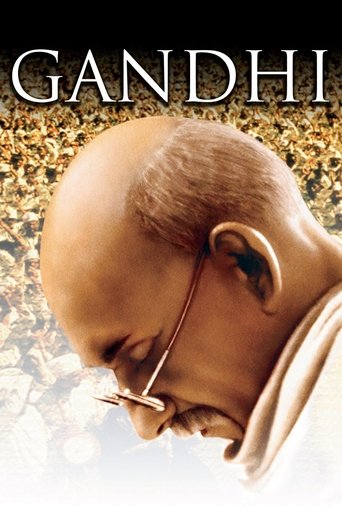
Gandhi
1983. Directed by Richard Attenborough, written by John Briley.
The Bechdel test
Bechdel score
2 / 3
Fails
-
Yes
1. At least two women
8 women characters. 8 of them speak. -
Yes
2. Who talk to each other
Women do talk to each other. -
No
3. About something besides a man
Every conversation between women that our parser found mentions a man.
Second opinion
Agree bechdeltest.com readers give it 2 out of 3.
The film
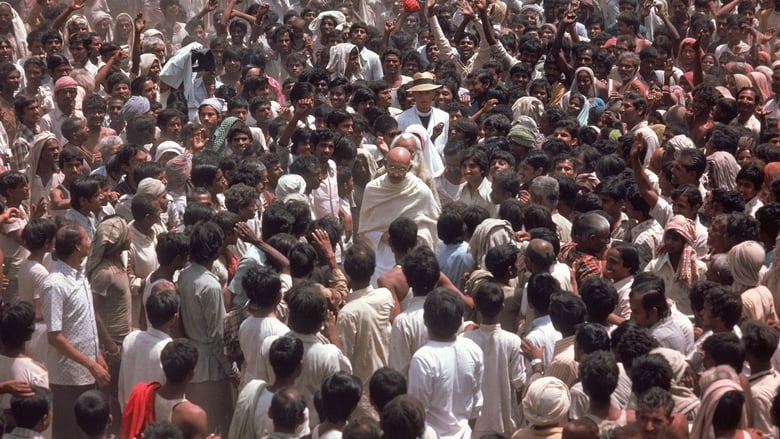
In 1893, Mohandas K. Gandhi is thrown off a South African train for being an Indian and traveling in a first class compartment. Gandhi realizes that the laws are biased against Indians and decides to start a non-violent protest campaign for the rights of all Indians in South Africa. After numerous arrests and the unwanted attention of the world, the government finally relents by recognizing rights for Indians, though not for the native blacks of South Africa. After this victory, Gandhi is invited back to India, where he is now considered something of a national hero. He is urged to take up the fight for India's independence from the British Empire. Gandhi agrees, and mounts a non-violent non-cooperation campaign of unprecedented scale, coordinating millions of Indians nationwide. There are some setbacks, such as violence against the protesters and Gandhi's occasional imprisonment. Nevertheless, the campaign generates great attention, and Britain faces intense public pressure. Too weak from World War II to continue enforcing its will in India, Britain finally grants India's independence. Indians celebrate this victory, but their troubles are far from over. Religious tensions between Hindus and Muslims erupt into nation-wide violence. Gandhi declares a hunger strike, saying he will not eat until the fighting stops. The fighting does stop eventually, but the country is divided. It is decided that the northwest area of India, and eastern part of India (current day Bangladesh), both places where Muslims are in the majority, will become a new country called Pakistan (West and East Pakistan respectively). It is hoped that by encouraging the Muslims to live in a separate country, violence will abate. Gandhi is opposed to the idea, and is even willing to allow Muhammad Ali Jinnah to become the first prime minister of India, but the Partition of India is carried out nevertheless. Gandhi spends his last days trying to bring about peace between both nations. He thereby angers many dissidents on both sides, one of whom finally gets close enough to assassinate him.
- Released
- 25 Feb 1983
- Genres
- Biography, Drama, History
- Rated
- PG
- IMDb
- 8 / 10
- Metascore
- 79 / 100
- Awards
- Won 8 Oscars. 35 wins & 23 nominations total
- Elsewhere
- View on IMDb
Starring, by lines spoken
- Women
- Men
- Not in the cast list
- Bigger name, more lines
- Gandhi 318 lines, man
- Nehru 61 lines, man
- Ba 48 lines
- Patel 38 lines, man
- Charlie 31 lines, man
- Jinnah 30 lines, man
- Walker 27 lines, man
- Bourke-White 23 lines, woman
- Mirabehn 23 lines, woman
- Smuts 22 lines, man
Full cast, 151 people
- Ben Kingsley as Mahatma Gandhi
- Candice Bergen as Margaret Bourke-White
- Edward Fox as General Dyer
- John Gielgud as Lord Irwin
- Trevor Howard as Judge Broomfield
- John Mills as Lord Chelmsford
- Rohini Hattangadi as Kasturba Gandhi
- Martin Sheen as Vince Walker
- Ian Charleson as Reverend Charlie Andrews
- Harsh Nayyar as Nathuram Godse
- Athol Fugard as General Jan Christiaan Smuts
- Günther Maria Halmer as Dr. Herman Kallenbach
- Saeed Jaffrey as Sardar Vallabhbhai Patel
- Geraldine James as Mirabehn
- Alyque Padamsee as Mohammad Ali Jinnah
- Amrish Puri as Khan
- Roshan Seth as Pandit Nehru
- Ian Bannen as Senior Police Officer Fields
- Michael Bryant as Principal Secretary
- John Clements as Advocate General
- Richard Griffiths as Collins
- Nigel Hawthorne as Kinnoch
- Bernard Hepton as G.O.C.
- Michael Hordern as Sir George Hodge
- Shreeram Lagoo as Gopal Krishna Gokhale
- Virendra Razdan as Maulana Azad
- Richard Vernon as Sir Edward Gait
- Prabhakar Patankar as Prakash
- Vijay Kashyap as Apte
- Nigam Prakash as Karkare
- Supriya Pathak as Manu
- Neena Gupta as Abha
- Shane Rimmer as Commentator
- Peter Harlowe as Lord Mountbatten
- Anang Desai as J.B. Kripalani
- Winston Ntshona as Porter
- Peter Cartwright as European Passenger
- Marius Weyers as Conductor
- Richard Mayes as Baker
- Alok Nath as Tyeb Mohammed
- Dean Gasper as Singh
- Ken Hutchison as Police Sergeant
- Norman Chancer as Reporter
- Gulshan Kapoor as Rich Merchant
- Charu Bala Chokshi as Ayah
- Raj Chaturvedi as Harilal Gandhi
- Avpar Jhita as Manilal Gandhi
- Anthony Sagger as Ramdas Gandhi
- Om Puri as Nahari (uncredited)
- David Gant as Daniels
- Daniel Day-Lewis as Colin
- Ray Burdis as Youth
- Daniel Peacock as Youth
- Avis Bunnage as Colin's Mother
- Caroline Hutchison as Sonja Schlesin
- Mohan Agashe as Tyeb Mohammed's Friend
- Sudhanshu Mishra as Man in Gallery
- Dina Nath as Miner
- John Savident as Manager of the Mine
- John Patrick as Mounted Police Sergeant
- Michael Godley as Clergyman
- Stewart Harwood as Prison Officer
- Stanley McGeagh as Prison Guard
- Christopher Good as Young Englishman
- David Markham as Older Englishman
- Jyoti Sarup as Young Indian Reporter
- John Naylor as English Reporter
- Wilson George as American Reporter
- Hanshu Mehta as Older Indian Reporter
- Sudarshan Sethi as Motilal Nehru
- Sunila Pradhan as Mrs. Motilal Nehru
- Moti Makan as Traveller on Train Roof
- Jalal Agha as Traveller on Train Roof
- Rupert Frazer as Cavalry Troop Leader
- Manohar Pitale as Shukla
- Homi Daruvala as Nehru's Friend
- K.K. Raina as Nehru's Friend
- Vivek Swaroop as Nehru's Friend
- Raja Biswas as Nehru's Friend
- Dominic Guard as Subaltern
- Bernard Hill as Sergeant Putnam
- Rama Kant Jha as Village Leader
- Nana Palsikar as Villager
- Alpna Gupta as Villager's Wife
- Chandrakant Thakkar as Policeman
- John Quentin as Batsman
- Graham Seed as Wicket-Keeper
- Keith Drinkel as Major
- Bob Barbenia as Police Guard
- Gerald Sim as Magistrate
- Colin Farrell as Clerk
- Sanjeev Puri as Young Man
- Gareth Forwood as Secretary
- Vijay Crishna as Chauffeur
- Sankalp Dubey as Servant
- James Cossins as Brigadier
- Gurcharan Singh as Speaker in Jallianwalla Bagh
- John Vine as A.D.C.
- Geoffrey Chater as Government Advocate
- Ernest Clark as Lord Hunter
- Habib Tanvir as Indian Barrister
- Pankaj Mohan as Mahadev Desai
- Subhash Gupta as Policeman at Chauri Chaura
- Aadil as Policeman at Chauri Chaura
- Rajeshwar Nath as Marcher at Chauri Chaura
- S.S. Thakur as Marcher at Chauri Chaura
- Rahul Gupta as Boy with Goat
- Barry John as Police Superintendent
- Brian Oulton as Clerk of Court
- James Snell as Court Reporter
- John Boxer as Court Reporter
- Gerard Norman as Court Reporter
- Bernard Horsfall as General Edgar
- Richard Leech as Brigadier
- Pankaj Kapur as Pyarelal
- Tarla Mehta as Sarojini Naidu
- David Sibley as Subaltern
- Dalip Tahil as Zia
- Stanley Lebor as Police Officer
- Terrence Hardiman as Ramsay MacDonald
- Monica Gupta as Little Girl
- Jon Croft as Colonel
- William Hoyland as Adjutant
- John Ratzenberger as American Lieutenant
- Jack McKenzie as Major at Aga Khan Palace
- Tom Alter as Doctor at Aga Khan Palace
- Jane Myerson as Lady Mountbatten
- Roop Kumar Razdan as Hindu Youth at Ashram
- Bani Sharad Joshi as Woman Refugee
- Vagish Kumar Singh as Man Refugee
- Dilsher Singh as Abdul Ghaffar Khan
- Sudhir Dalvi as Police Commissioner
- Tilak Raj as Tahib
- Irpinder Puri as Sushila Nayyar
- Pren Kapoor as Hindu Youth in Calcutta Street
- Vinay Apte as Hindu Youth in Calcutta Street
- Aswini Kumar as Hindu Youth in Calcutta Street
- Avinash Dogra as Hindu Youth in Calcutta Street
- Shreedhar Joshi as Hindu Youth in Calcutta Street
- Suhas Palshikar as Hindu Youth in Calcutta Street
- Karkirat Singh as Nehru's Aide
- Shekhar Chattopadhyay as Suhrawardy
- Amarjeet as Goonda
- Pratap Desai as Goonda
- Bhatawadekar Prakash as Goonda
- Sunil Shende as Goonda
- Rovil Sinha as Goonda
- Derek Lyons as Radio Reporter at Funeral (uncredited)
- Fred Wood as Man in the Crowd (uncredited)
- Nassar Abdulla
- Gito Santana as Lawyer
Who talks, scene by scene
Lines of dialogue in every 4 scenes, start to finish. Women above the line, men below. 12% of lines come from characters we couldn't match to the cast list and aren't shown.
Women
Men
Scene 1 Scene 148
Hover, tap or tab to a bar to see those scenes: where they happen and who's talking.
Show the numbers
| Scenes | Women's lines | Men's lines |
|---|---|---|
| 1 to 4 | 0 | 0 |
| 5 to 8 | 1 | 20 |
| 9 to 12 | 1 | 48 |
| 13 to 16 | 3 | 27 |
| 17 to 20 | 0 | 46 |
| 21 to 24 | 0 | 19 |
| 25 to 28 | 0 | 40 |
| 29 to 32 | 1 | 37 |
| 33 to 36 | 0 | 0 |
| 37 to 40 | 0 | 0 |
| 41 to 44 | 0 | 3 |
| 45 to 48 | 0 | 23 |
| 49 to 52 | 0 | 23 |
| 53 to 56 | 0 | 32 |
| 57 to 60 | 0 | 16 |
| 61 to 64 | 0 | 59 |
| 65 to 68 | 0 | 45 |
| 69 to 72 | 0 | 22 |
| 73 to 76 | 0 | 19 |
| 77 to 80 | 10 | 41 |
| 81 to 84 | 5 | 36 |
| 85 to 88 | 0 | 42 |
| 89 to 92 | 1 | 22 |
| 93 to 96 | 0 | 11 |
| 97 to 100 | 0 | 5 |
| 101 to 104 | 0 | 24 |
| 105 to 108 | 0 | 7 |
| 109 to 112 | 2 | 16 |
| 113 to 116 | 11 | 11 |
| 117 to 120 | 0 | 15 |
| 121 to 124 | 0 | 5 |
| 125 to 128 | 3 | 21 |
| 129 to 132 | 1 | 12 |
| 133 to 136 | 2 | 12 |
| 137 to 140 | 1 | 19 |
| 141 to 144 | 2 | 5 |
| 145 to 148 | 12 | 12 |
The evidence
- Straight from the script
- Counted from the script and the credits
Tap an exhibit to open it.
Exhibit A: every 100 lines
Out of every 100 lines with a known speaker, 7 are women's.
56 lines from women, 795 from men.
- Women
- Men
Exhibit B: who's in it
8 women and 88 men in the cast. 8 women and 69 men from it get lines.
Characters
With lines
- Women
- Men
Exhibit C: who gets heard
The first woman speaks at line 2 of 969.
The longest stretch with no woman speaking runs 302 lines.
Every line of dialogue, first to last
- First line by a woman
- Longest stretch with no woman speaking
Words spoken
Women speak 4% of the words (534), men 96% (11,837). Women have 7% of the lines, so their lines run shorter than men's.
Exhibit D: the test the other way
Two named men talk to each other about something besides a woman. It passes the reverse test.
Conversations between two named characters
Two women
2
Two men
70
Exhibit E: behind the camera
1 of the 14 people in these jobs is a woman.
Across the whole crew, 9% of the people whose gender is listed are women.
- Directed by
- Richard Attenborough (man)
- Written by
- John Briley (man)
- Produced by
- Richard Attenborough (man), Terence A. Clegg (man)
- Shot by
- Billy Williams (man), Ronnie Taylor (man)
- Edited by
- John Bloom (man)
- Music by
- George Fenton (man), Ravi Shankar (man)
- Production design by
- Stuart Craig (man), Robert W. Laing (man)
- Costumes by
- Bhanu Athaiya (woman), John Mollo (man)
- Cast by
- Dolly Thakore (gender not listed)
The crew, department by department
-
Production
2 women, 6 men, 31 not listed
-
Art
1 women, 9 men, 12 not listed
-
Costume & Make-Up
1 women, 5 men, 16 not listed
-
Sound
0 women, 11 men, 11 not listed
-
Camera
0 women, 6 men, 11 not listed
-
Directing
1 women, 7 men, 7 not listed
-
Other crew
0 women, 1 men, 8 not listed
-
Editing
0 women, 3 men, 4 not listed
- Women
- Men
- Gender not listed on TMDB
Exhibit F: how old the stars were
Women: 32 on average. Men: 54 on average.
The top-billed cast, at the film's release.
Women
Rohini Hattangadi 27, Candice Bergen 36
Men
Ian Charleson 33, Ben Kingsley 38, Martin Sheen 42, Edward Fox 45, Trevor Howard 69, John Mills 74, John Gielgud 78
Exhibit G: the money
It made 3.5 times what it cost.
- Budget
- $22 million
- Box office
- $77.7 million
From TMDB, not adjusted for inflation.
About this analysis
Our parser read the script: 148 scenes and 969 lines of dialogue. The bechdeltest.com rating comes from that site’s readers. How the test works